Digital Transformation: Modernizing Legacy Integrations

A Global Enterprise Achieves Real-Time Scalability and Agility with Microsoft Azure Integration Services.


A global event marketing provider faced significant challenges due to a legacy monolithic architecture that relied on batch-based, tightly coupled connections. This architecture hampered scalability, lacked real-time visibility, and required extensive manual intervention. Our strategic objective was to modernize over 100 legacy integrations by transitioning to a cloud-native, API-first model using the Microsoft Azure Integration Services suite. This transformation successfully established a resilient, highly automated, and secure foundation, positioning the client for rapid future innovation.

The Problem with Legacy Systems

Core Pain Points: The Bottlenecks

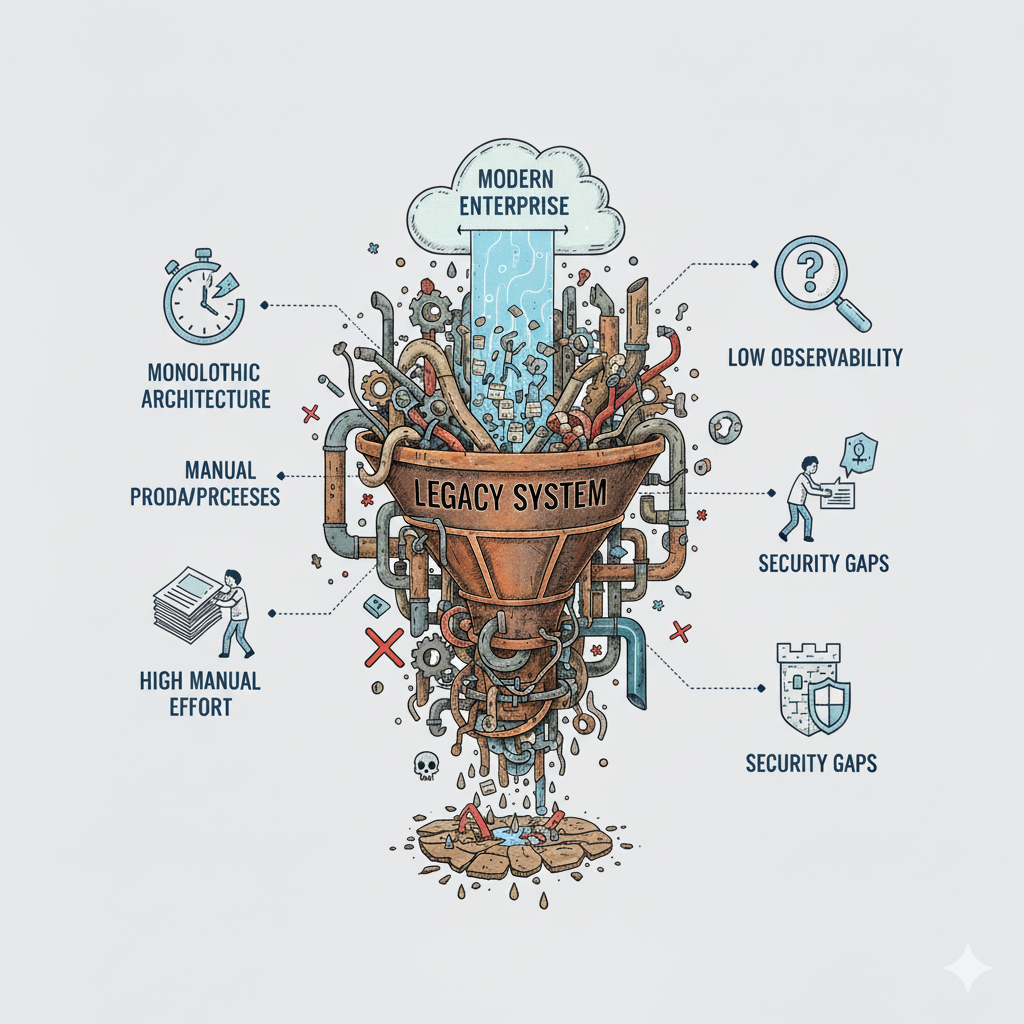
The complexity of the expanding enterprise was suffocating the IT infrastructure. Dependency on dated systems resulted in high operational costs and significant technical debt. The following specific pain points demanded immediate attention:

  • Monolithic Architecture: Limited scalability and flexibility, making system updates slow and risky.
  • Lack of Real-Time Monitoring: No automated error handling and low observability, leading to delayed issue resolution.
  • High Manual Effort: Excessive manual file transfers, reprocessing tasks, and job scheduling.
  • Low Reusability & Governance: Integrations were siloed, lacking standardized security and compliance controls.

Our Azure-Powered Solution

Hybrid Integration Architecture

Designed a resilient framework utilizing Azure Logic Apps, API Management, and Service Bus for both synchronous and asynchronous workflows.

Automation & Reusability

Implemented CI/CD pipelines via Azure DevOps and created reusable templates for rapid, consistent integration deployment.

Security & Observability

Secured secrets with Azure Key Vault and enabled proactive monitoring with Azure Monitor and Log Analytics.

The Technology Stack

Category Azure Services Utilized
Integration Core Logic Apps, API Management, Functions, Service Bus, Event Grid
Security & Identity Azure Key Vault, Managed Identities
Observability Azure Monitor, Log Analytics
Deployment Azure DevOps CI/CD

Quantifiable Business Impact

100+

Integrations Modernized

Full transition from legacy to cloud-native.

60%

Reduction in Manual Effort

Achieved through CI/CD and automated error handling.

99.9%

Integration Uptime

Ensured by Azure’s high availability and proactive monitoring.

Strategic Value Delivered

Operational Efficiency:

Automated error handling and real-time monitoring dramatically reduced downtime and eliminated costly manual labor.

Accelerated Time-to-Market:

Reusable integration patterns and automated deployment pipelines accelerated the rollout of new business capabilities.

Enhanced Agility:

The cloud-native, microservices-oriented approach provided the necessary scalability and flexibility for future growth and rapid digital adoption.

Key Takeaways & Best Practices

Comprehensive Assessment

Always start with a detailed dependency analysis to fully map the complexity of the legacy estate before designing the target architecture.

Incremental Migration

Adopt a phased, incremental strategy for moving workloads. This minimizes risk and ensures business continuity during the transition.

Prioritize Reusability

Invest early in reusable API patterns, logging frameworks, and deployment templates. This is the primary driver for accelerating future development.

Copyright © Jade Business Solutions LLC.